How to Start a Professional Organizing Business in 30 Days
A simple launch roadmap for new professional organizers who want to build a real business with more confidence, clarity, and structure.
Starting a professional organizing business sounds simple at first.
You’re organized.
You love creating systems.
You’re good at helping people make sense of the chaos.
You may even be the person your friends already call when they need help cleaning out a closet, unpacking after a move, or finally dealing with the room everyone has been avoiding.
So naturally, the next thought is:
“Maybe I could get paid to do this.”
And yes. You absolutely can.
But turning your organizing skills into a real business takes more than a label maker, a few clear bins, and a cute Instagram bio.
You need a foundation.
You need basic systems.
You need client policies.
You need a way for people to find you.
You need to know what you offer, how much you charge, how people pay you, and what happens once they actually book.
And that is where a lot of new organizers start to spiral.
Do I need an LLC?
What should I charge?
Do I need a website?
What should go in my contract?
How do I take payments?
What supplies do I bring?
How do I find my first clients?
Deep breath.
You do not need to build the fanciest version of your business before you start. You need a clear enough plan to begin professionally, safely, and confidently.
That’s why I created The 30-Day Professional Organizer Startup Kit, a free checklist and resource guide to help new organizers start their business with less overwhelm and more direction.
Download the free 30-Day Professional Organizer Startup Kit
Below is a simple overview of what to focus on in your first 30 days.
What You Actually Need to Start a Professional Organizing Business

One of the biggest mistakes new professional organizers make is thinking they need everything perfect before they begin.
You do not need a perfect website.
You do not need a full brand shoot.
You do not need every organizing product on Amazon.
You do not need a complicated tech stack before your first client.
What you do need is clarity.
Before you start taking paid clients, you should know:
Who you help
What services you offer
Where you serve
How people inquire
How you price your work
How you collect payment
What policies are in place
What happens before, during, and after a session
That is the real startup work.
Not making everything pretty.
Not overbuilding systems you do not understand yet.
Not buying every bin and basket because it feels productive.
The goal is not to look like a huge organizing company on day one.
The goal is to create enough structure to serve your first clients well.
Week 1: Set the Foundation
Your first week should be focused on business clarity.
This is where you decide your business name, service area, ideal client, core services, and official launch date.
You’ll also want to think through your business structure, business email, business bank account, starting pricing, and basic client policies.
This is not always the glamorous part, but it matters.
If you skip the foundation, you may find yourself taking clients before you know how you charge, what your boundaries are, what your cancellation policy is, or how you want people to pay you.
That gets messy fast.
A strong foundation helps your business feel more professional from the beginning.
Inside the free startup kit, I walk you through the Week 1 checklist so you can start making these decisions without staring at a blank page.

Week 2: Build Your Backend Systems
Once you know what you offer, you need a simple way to run the business.
This includes your client intake form, consultation process, estimate or proposal template, service agreement, invoice process, payment system, bookkeeping setup, and client folder organization.
You do not need the most complicated software.
You need a client flow that makes sense.
At a basic level, that flow might look like this:
Inquiry → Intake Form → Consultation → Estimate → Agreement → Payment → Session Prep → Organizing Session → Follow-Up
That’s it.
A simple system you actually use is better than a fancy system you avoid.
Helpful tools for this stage may include platforms for payments, scheduling, contracts, client management, mileage tracking, and file storage. The full startup kit includes a curated resource directory with tools I use or recommend for professional organizers.
Week 3: Get Visible
Now it’s time to make it easier for people to find you.
Visibility does not mean posting everywhere all day every day. It means making it clear who you help, what you do, where you serve, and how someone can take the next step.
At minimum, consider setting up:
A simple website or landing page
A Google Business Profile
An Instagram or Facebook business page
A short business bio
A clear “what I do” statement
A simple launch announcement
A way for potential clients to inquire
This is also a good time to start thinking about your local visibility strategy.
Where are your ideal clients already spending time?
What problem are they trying to solve?
What would make them feel safe reaching out for help?
Professional organizing is personal. People are often inviting you into spaces they feel embarrassed, overwhelmed, or emotional about. Your marketing should feel clear, supportive, and trustworthy.
Not gimmicky.
Not pushy.
Not like you are yelling “BOOK NOW” into the void.
Clear messaging builds trust.

Week 4: Prepare for Your First Paid Session
This is where your business gets real.
Because eventually, you are not just creating a brand. You are walking into someone’s home.
And that matters.
Professional organizing is not just about making spaces look pretty. You are helping people make decisions, move through overwhelm, release items, create systems, and feel supported in their homes.
Before your first paid session, you’ll want to prepare:
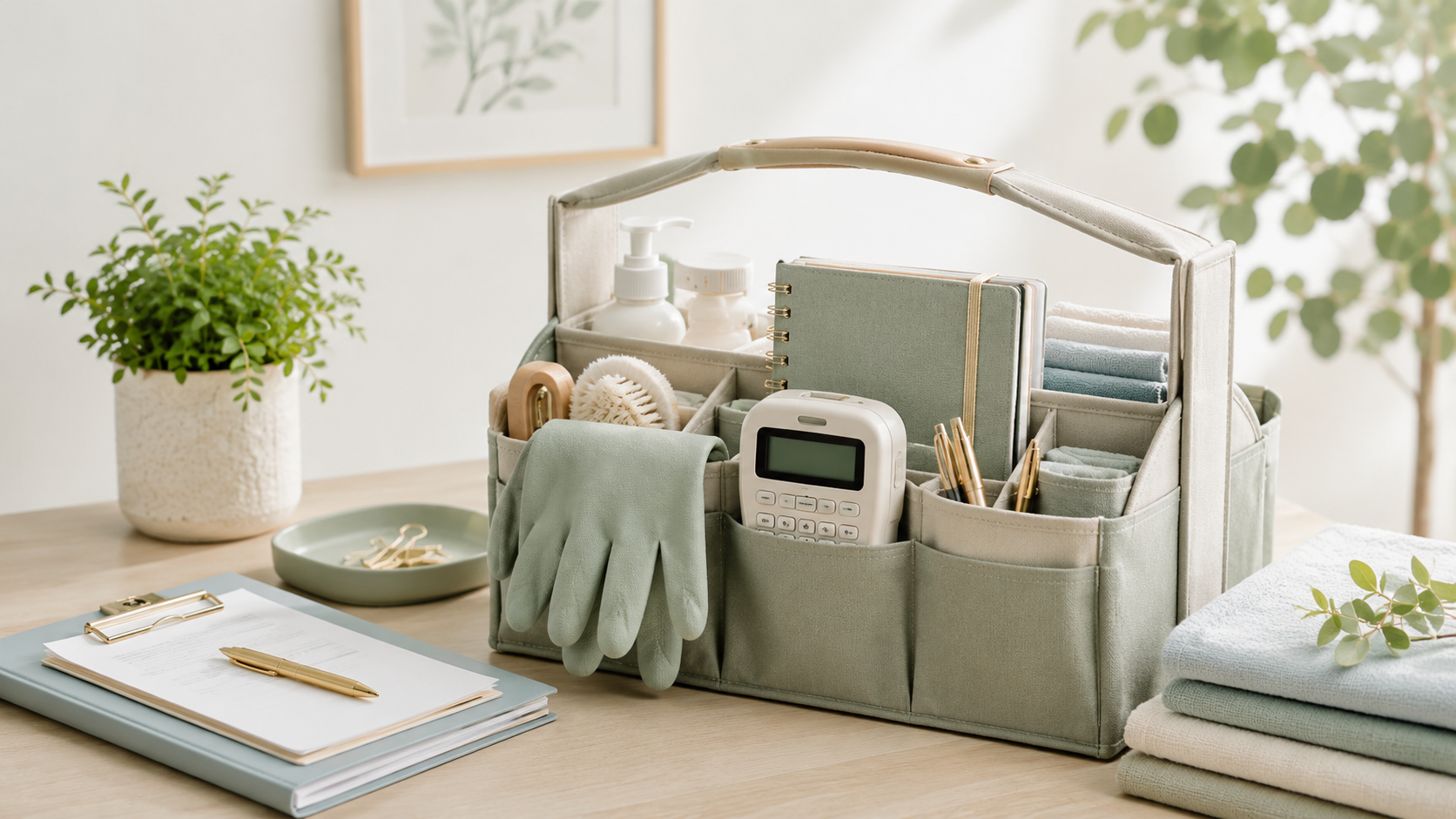
Your basic supply kit
Your client prep email
Your session flow
Your photo process
Your donation, trash, and recycling plan
Your follow-up process
Your testimonial request
You do not need to buy every organizing product before you start. But you should be prepared, professional, and safe.
Start with the essentials, then build your kit as you learn what kinds of projects you actually want to take.
Beginner Mistakes to Avoid
If you are just starting your professional organizing business, there are a few common mistakes that can make things harder than they need to be.
The big ones?
Waiting until everything is perfect.
Undercharging because you are new.
Buying too many products too soon.
Skipping policies and agreements.
Offering too many services at once.
Forgetting that organizing is emotional work.
Not tracking your numbers.
Trying to build everything alone forever.
Mistakes are part of business.
But repeated, avoidable mistakes? Those get expensive.
That is one of the reasons I created the 30-day startup kit. It gives you a clear place to start so you can stop piecing everything together from random advice and start building with more intention.
Want the Full 30-Day Professional Organizer Startup Checklist?
If you are ready to start your organizing business, I put the full roadmap into one simple, printable guide.
Inside The 30-Day Professional Organizer Startup Kit, you’ll get:
A 30-day launch roadmap
Weekly startup checklists
Business foundation tasks
Backend system prompts
Visibility and marketing steps
First-session prep reminders
Beginner mistakes to avoid
A curated resource directory
Professional organizer supply links
Tools, courses, templates, and support options
This is the guide I wish more new organizers had before they started trying to piece everything together alone.
Because you do not need to do everything.
You need to know what matters first.
Download the free 30-Day Professional Organizer Startup Kit
And when you are ready for deeper support, I’d love to help you inside Organizer In Demand, my membership for professional organizers who want practical business education, real examples, and ongoing support.
Use code YTPRO8 for $8 off your first month.
You do not have to figure this out alone.
You just need a clear next step.
Affiliate Disclosure
Some of the links in this post may be affiliate or referral links, which means I may earn a commission, credit, or referral bonus if you choose to use them. I only recommend tools, platforms, books, and supplies that I personally use, have used, or genuinely believe may be helpful for professional organizers building a real service-based business.